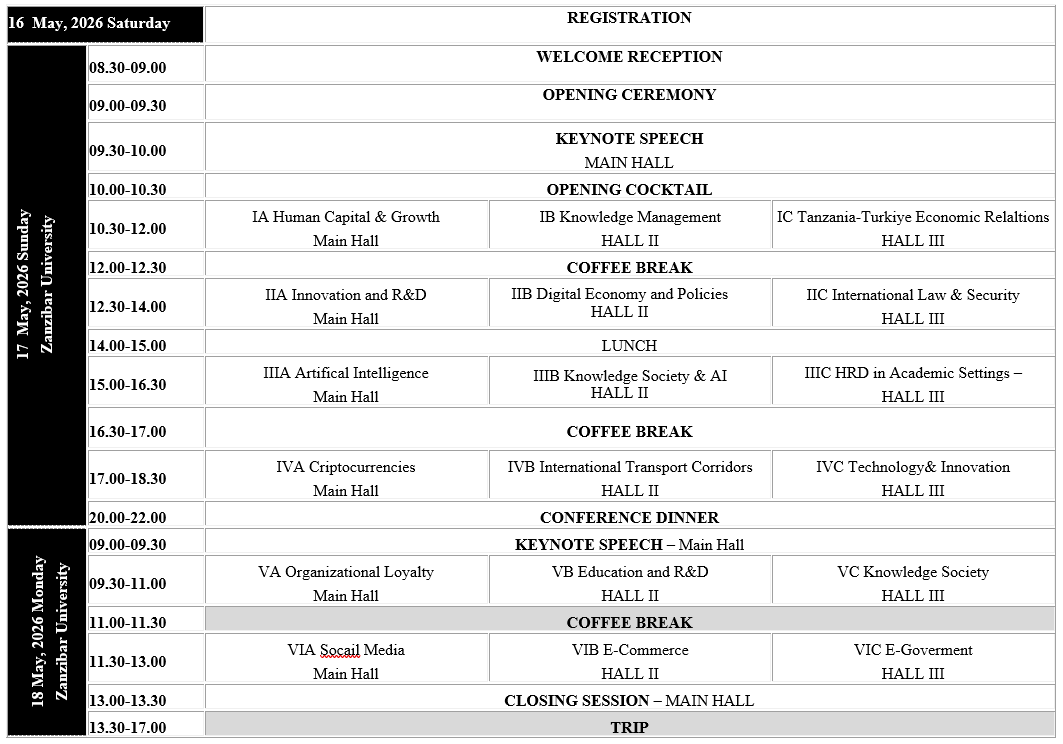
-
About the Conference
Boards
Takvim Bilim ve Danışma Kurulu
Advisory Board & Review Committee
Prof. Dr. Ali Rıza Abay
Yalova University
Prof. Dr. Asaf Savaş Akat
Bilgi University
Prof. Dr. Mustafa Aykaç
Kırklareli University
Prof. Dr. Ali Akdemir
Trakya University
Prof. Dr. Mehmet Altan
Istanbul University
Prof. Dr. Coşkun Can Aktan
Dokuz Eylül University
Prof. Dr. Hayriye Atik
Erciyes University
Prof.Dr. Mehmet Barca
Yıldırım Beyazıt University
Prof. Dr. Susan Bruyere
Cornell Universiy
Prof. Dr. Taner Berksoy
Bahçeşehir University
Prof. Dr. Veysel Bozkurt
Istanbul University
Prof. Dr. Mehmet Bulut
Yıldırım Beyazıt University
Prof. Dr. Coşkun Çakır
İstanbul Şehir University
Prof. Dr. Bengü Çapar
Başkent University
Prof. Dr. Mehmet Duman
Artvin University
Prof. Dr. Ekrem Erdem
Erciyes University
Prof. Dr. Ercan Eren
Yıldız Technical University
Prof. Dr. Erol Eren
Beykent University
Prof. Dr. Neşe Erim
Kocaeli Üniversity
Prof. Dr. Hüsnü Erkan
Dokuz Eylül University
Prof. Dr. Nihat Erdoğmuş
Istanbul Şehir University
Prof. Dr. Gary S. Fields
Cornell Uniersity
Prof. Dr. Nurullah Genç
Istanbul Commerce University
Prof. Dr. Ahmet H. İslamoğlu
İstanbul Aydın University
Prof. Dr. Ahmet İncekara
Istanbul University
Prof. Dr. Muhsin Kar
Çukurova University
Prof. Dr. Erdal Karagöl
Yıldırım Beyazıt University
Prof. Dr. Harry Katz
Cornell Universiy
Prof. Dr. Tamer Koçel
Istanbul Kültür University
Prof. Dr. Numan Kurtulmuş
Istanbul Commerce University
Prof. Dr. Risa L. Lieberwitz
Cornell University
Prof. Dr. Eul-Teo Lee
Kunsan National University
Prof. Dr. Sedat Murat
Istanbul University
Prof. Dr. William S. Neilson
Texas A&M University
Prof. Dr. Suleyman Ozdemir
İstanbul University
Prof. Dr. İbrahim Öztürk
Marmara University
Prof. Dr. Nick Salvatore
Cornell Universiy
Prof. Dr. Richard A. Swanson
University of Minnesota
Prof. Dr. Gabriel Talmain
York University
Prof. Dr. Aysıt Tansel
Middle East Technical University
Prof. Dr. Yusuf Tuna
Istanbul Commerce University
Prof. Dr. Ömer Torlak
Eskişehir Osmangazi University
Prof. Dr. Mehmet Tokat
Hacettepe University
Prof. Dr. Gülsün Gürkan Yay
Yıldız Technical University
Prof. Dr. Turan Yay
Yıldız Technical University
Prof. Dr. Erinç Yeldan
Bilkent University
Prof. Dr. Kemal Yıldırım
Eskişehir University
Prof. Dr. Uğur Yozgat
Marmara University
Prof. Dr. Raquib Zaman
Ithaca College
Prof. Dr. Hamza Ateş
Istanbul Medeniyet University
Prof. Dr. Emre Bağce
Marmara University
Prof. Dr. Yılmaz Bingöl
Nişantaşı University
Prof. Dr. Seyfettin Erdoğan
Istanbul Medeniyet University
Prof. Dr. İsmail H. Genç
American University of Sharjah
Prof. Dr. AAhad M. Osman-Gani
IIUM University
Prof. Dr. Gary N. Mc Lean
Texas A&M University
Prof. Dr. Gülfettin Çelik
Istanbul Medeniyet University
Prof. Dr. Efe Çaman
Medeniyet Üniversity
Assoc. Prof. Dr. Tuncay Güloğlu
Yalova Üniversity
Assoc. Prof.Dr. Zeki Parlak
International University of Sarajevo
Assoc. Prof.Dr. İbrahim G. Yumuşak
Istanbul Medeniyet University
Assoc. Prof. Dr. Kenan Dağcı
Yalova Üniversity
Assoc. Prof. Dr. Vedat Demir
Istanbul University
Assoc. Prof.Dr. R. Deniz Özbay
Marmara University
Prof. Dr. Ertan Oktay Doğuş University
U. Yönetim Kurulu (10. Kongre)
The Executive Board of Joint Conference
Prof. Dr. AAhad M. Osman-Gani
IIUM University, Malaysia
Prof. Dr. Gary N. McLean
Texas A&M University, USA
Prof. Dr. Seyfettin Erdogan
Istanbul Medeniyet University, Turkey
Prof. Dr. Ertan Oktay
Doğuş University, Turkey
Assoc.Prof. Dr. Ibrahim Guran Yumusak
Istanbul Medeniyet University, Turkey
Assoc. Prof. Dr. Mesut Akdere
Antalya International University, Turkey
Yönetim Kurulu
The Board of Management
Prof. Dr. Ali Akdemir
Çanakkale Onsekiz Mart University
Prof. Dr. Mehmet Altan
İstanbul University
Prof. Dr. Veysel Bozkurt
İstanbul University
Prof. Dr. Erol Eren
Beykent University
Prof. Dr. Hüsnü Erkan
Dokuz Eylül University
Prof. Dr. Nihat Erdoğmuş
İstanbul Şehir University
Prof. Dr. Ömer Torlak
Eskişehir Osmangazi University
Assoc. Prof.Dr. İbrahim G. Yumuşak
İstanbul Medeniyet University
Onur Kurulu ( 10. Kongre)
The Honorary Board
Prof.Dr. Hamit Okur
İstanbul Medeniyet University, Turkey
Prof.Dr. Elif Çepni
Doğuş University, Turkey
Prof.Dr. Darlene Russ-eft
AHRD, USA
Yürütme Kurulu ( 10. Kongre)
The Organizing Committee
Prof.Dr. Gülfettin Çelik
Istanbul Medeniyet University
Prof.Dr. Ertan Oktay
Doğuş University
Assoc.Prof. Mahmut Bilen
Sakarya University
Assoc.Prof. Murat Taşdemir
Istanbul Medeniyet University
Assist.Prof. Ayfer Gedikli
Istanbul Medeniyet University
Assist.Prof. Dr. Abdullatif Çeviker
Istanbul Medeniyet University
Assist.Prof. Hamdi Genç
Istanbul Medeniyet University
Res.Asst. Çağrı Erdem Doğuş University
Kongre Genel Sekreterliği
The General Secretariat of Congress
Assoc. Prof.Dr. Ibrahim G. Yumusak
İstanbul Medeniyet University
Vice: Assoc. Prof.Dr. Tuncay Guloglu
Yalova University
Vice: Assoc. Prof.Dr. R. Deniz Özbay
Marmara University
Uluslararası Eşgüdüm Kurulu
International Coordination Board
Prof. Dr. Harry Katz
Cornell Universiy
Prof. Dr. Raqibuz Zaman
Ithaca College
Prof. Dr. Eul-Teo Lee
Kunsan National University
Prof. Dr. Mehdi İlhan
Avustralian National University
Prof. Dr. Asta Valackiene
Kaunas University of Technology
Prof. Dr.İsmail H. Genç
American University of Sharjah
Prof. Dr. Erdal Karagöl
Yıldırım Beyazıt University
Assoc.Prof. Saim Kayadibi
IIUM, Malaysia
Assoc. Prof.Dr. Mesut Akdere
University of Wisconsin-Milwaukee
Assist. Prof.Dr. Talat Ulussever
King Fahd University of Petr. & Min.
Conference Themes
Bildiri ile Katılım Scholars, practitioners, consultants, and policy-makers interested in HRD and Knowledge,
Economy & Management are invited to submit manuscripts & proposals relevant to the followingtopical areas and streams:
Suggested Streams of Submissions
Human Resource Development• Global Economic Crisis & HRD
• Global & Cross-Cultural HRD
• HRD Theories & Practices relevant to Asian &MENA contexts
• Performance & Career Development
• Training & Organization Development
• Learning & Performance Development
• Decent Work & Quality of Work Life
• Values, Politics, Power, Ethics & HRD
• Leadership & HRD
• Talent Development, Engagement & Retention
• Social Networking & HRD
• Community Resource Development
• Gender, Ethnicity, Diversity & HRD
• Spirituality, Religiosity & HRD
• National HRD Policies & Strategies
• Sustainable Development & HRD
• Emerging Issues in HRDThe Knowledge Economy
• Innovation and Technology Absorption for Growth
• Diversification Through Innovation: Prospects for Growth
• Implementing Knowledge Economy Strategies
• Improving Competitiveness Through a Knowledge-Based Economy
• Human Capital & Economic Growth
• Technology & Economic Theory
• Global Economic Crises & The Knowledge Economy
• The Knowledge Economy & Asian & MENA CountriesKnowledge Management & E-Business
• Electronic Human Resources Management
• Innovation Management
• Content Management
• Data Mining
• E-Learning and Distance Education
• ICT Management and Standards
• Electronic Commerce and Payment Systems
• Electronic Banking and Finance
• Security Issues and Standards
• Enterprise Resource PlanningThe Knowledge Society
• Social Networks and Societal Impact
• E-Government & Knowledge Cities• Information, Politics and Democratization
• International Relations in the Knowledge Society
• Social Policy in Knowledge Society
• Privacy Issues in the Knowledge Society
• Labor Relations in the Knowledge Society
• Management of Education and Training
• Globalization and Impacts
• Others relevant issues (covering the areas of HRM, Economics, Management, Education,Psychology, Sociology, Anthropology, Philosophy and other fields of social sciences)
If you feel your contribution does not fit into any of the above category, you are welcome to make your submission in the last listed category.Submission Dates:
Early manuscript/proposal submission deadline: May 12, 2012
Authors notified of decisions and rework status: June 12, 2012
Early bird registration deadline: July 12, 2012
Late manuscript/proposal submission deadline: August 1, 2012
Camera-ready submission deadline for accepted manuscripts: August 12, 2012
Payment deadline of Conference registration fees: September 12, 2012
Notification of congress final program: October 12, 2012Submission Process:
All manuscripts are to be submitted through online abstract submission tool.
Registration :
At least one author for each accepted submission must register for the conference by
September 12, 2012, in order for the submission to be included in the conference program
and proceedings. The registration form will be available at the conference website:
http://www.beykon.orgGeneral Secretary
Bildiri ile Katılım GENEL SEKRETER:
Doç.Dr. İbrahim Güran YUMUŞAK
İSTANBUL MEDENİYET ÜNİVERSİTESİ
Adres: Siyasal Bilgiler Fakültesi İktisat Bölümü Toros Cad. Cevizli Mah.
Gürbüz Sk. No:6/4 Maltepe / İstanbul
Telefon: +90216.280 25 03
GENEL SEKRETER YARDIMCISI:
Doç.Dr. Tuncay GÜLOĞLU
Yalova Üniversitesi İktisadi ve İdari Bilimler Fakültesi
OFFICIAL AIRLINE

"Turkish Airlines is the official carrier of International Conference on Knowledge, Economy and Management and offers a special discounted rate for the participants:
Up to 20% on Business Class
Up to 15% on Comfort Class
Up to 10% on Economy Class
Please show the event registration letter to the Sales Office of Turkish Airlines in your country and quote the following Convention Code 052TKM12 if you plan to attend to International Conference on Knowledge, Economy and Management via Turkish Airlines.
For a list of Turkish Airlines offices please follow the link: http://www.turkishairlines.com/en-INT/contact_us/offices.aspxPrevious Meetings
Kongre Hakkında About Congress


Proceedings


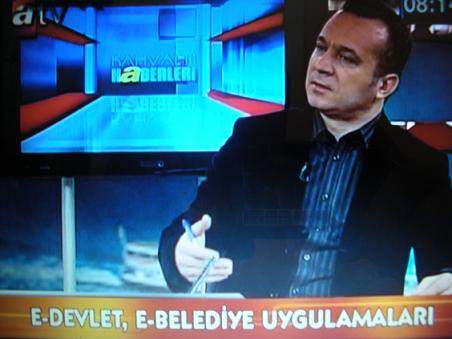
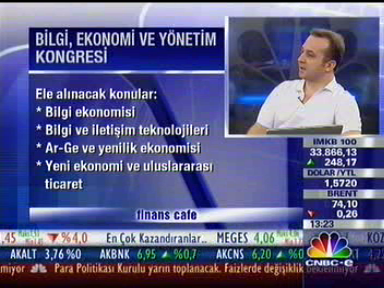
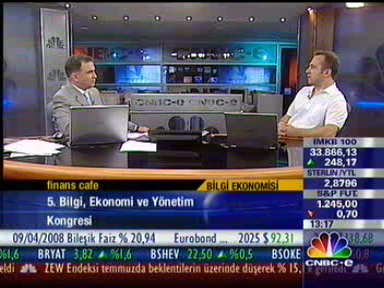
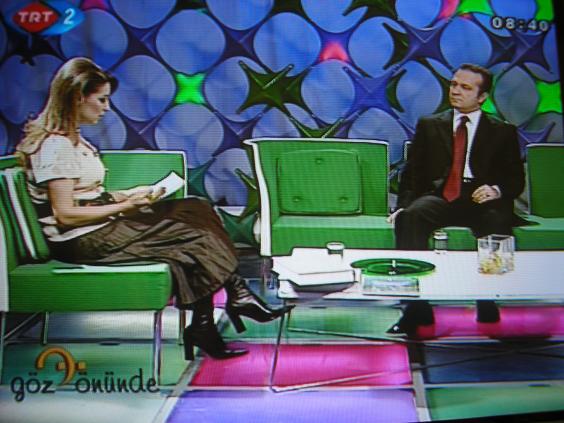
Congress and Media


Mehmet
Altan, Sabah Gazetesi, 19.9.2005,
Toktamış
Ateş, Bugün Gazetesi, 06.11.2010Bylaw
BİLGİ RULES OF INTERNATIONAL CONFERENCE ON KNOWLEDGE, ECONOMY, AND MANAGEMENT
Name of the Conference:
The name of the Conference is the INTERNATIONAL CONFERENCE ON KNOWLEDGE, ECONOMY, AND MANAGEMENT.
Purpose of the Conference:
To bring the researchers, experts, scientists, and practitioners working in the fields of Knowledge, Economy, and Management together; to provide an environment conducive to sharing, discussing, and spreading new information and opinions; and to ensure that scientific results are transferred to relevant organizations and institutions and are made available to the public.
Logo of the Conference:
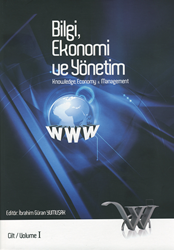
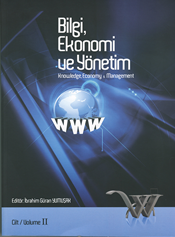
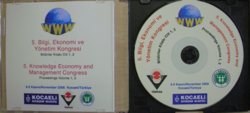
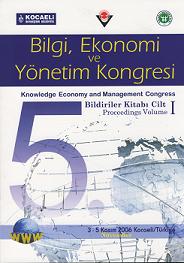
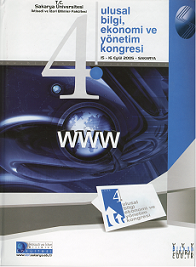
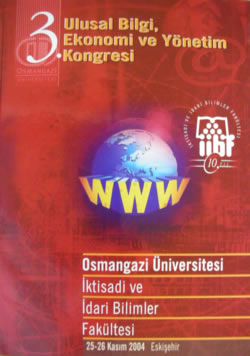
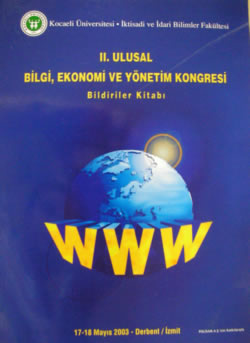
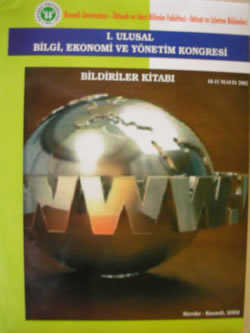
The logo of the Conference is the letters WWW in front of the Earth rotating on its axis. This logo may be used in different compositions for each Conference; it may not, however, be changed.
Date and Period of the Conference:
The standard dates of the Conference fall around September – October. The Conference is held at least every two years but no more than once a year.. The Board of Directors may change the dates and period of the Conference if it deems it necessary.
Committees of the Conference:
The Conference has four main bodies: the Science Board, the Executive Board, the Board of Directors, and the General Secretariat. An Advisory Committee and/or Honorary Committee may be formed if so required by the Board of Directors. Duties and powers of existing bodies may not be transferred to bodies that formed at a later time.
Scientific Board: Consists of academicians and practitioners with advanced degrees who have conducted academic studies and who contribute (or who may contribute) to the improvement of the Conference. Scientific Board members are appointed by the Board of Directors following recommendations by the Executive Committee; the Scientific Board consists of a new panel of members every Conference. Members of the Board are automatic members of the Science Board.
Duties and powers:
-To propose key issues to be presented at the Conference
-To assess declaration proposals according to the procedure set out by the Executive Committee
-To assess the declaration texts
-To supervise the sessions in concordance with the instructions from the Board of Directors
-To carry out activities that will promote the Conference and increase the participation of academicians
-To make scientific suggestions to the bodies of the Conference
Board of Directors: Composed of academicians who have contributed to the formation and improvement of the Conference. It is a permanent body and the top body of the Conference. Dean of the University in charge of the Conference are automatic members of the Board.
Members of Board of Directors:
Dean of the University in charge of the Conference
Dr. Hüsnü Erkan
Dr. Veysel Bozkurt
Dr. Ali Akdemir
Dr. Mehmet Altan
Dr. Erol Eren
Dr. Nihat Erdoğmuş
Dr. Ömer Torlak
Dr. İbrahim Güran Yumuşak
Gatherings of the members of the Board are initiated upon the call and agenda of the General Secretary. A Chairman is elected at each meeting and the agenda is discussed. Absolute majority of the attendees is needed for a resolution. In cases split decisions, the resolution that Chairman votes on on behalf of the Board is considered valid. Persons who are not able to attend a meeting due with a valid excuse may assign other members of the Board as proxies. If it is not possible to gather in a physical location, member opinions may be taken via e-mail.
Board membership expires upon resignation or upon the failure to fulfill any of the obligations for any reason. No replacement is made for the members whose membership is expired upon resignation or upon the Board's decision. The Board of Directors may elect a new member with the written proposal by 1/3 of the total number of Board members and with the consent of 2/3 of the members.
Duties and powers:
-To decide which faculty will organize and hold the Conference
-To determine the date of the Conference as well as its schedule, which must be in accordance with the proposals of the Executive Committee
-To make the final decision on the main issues and the main theme of the Conference following the proposal by the Science Board and the subsequent assessment by the Executive Committee
-To determine the main criteria to be applied to the assessment of declarations and declaration scripts
-To designate the members of the Science Board
-To approve the draft budget to be proposed by the Board of Directors
-To finalize any proposal of the Science Board and Executive Committee
-To appoint the Secretary General pursuant to the proposal of the Science Board
-To contribute to the activities that support the Conference and related works such as establishing research centers and publishing magazines
-To cooperate with organizations and institutions operating in similar fields
-To determine the rules and regulations related to the works of the bodies
-To make decisions on the cancellation of Board membership
-To form, whenever necessary, an Inspection Board consisting of three Board members and to determine the term and powers of this Board.
Executive Board: Carries out activities necessary for the proper organization of the Conference in light of the assessments of the Science Board and the decisions of the Board of Directors. It is composed of academicians appointed by the Dean of the faculty in charge of the Conference. The Chairman of the Executive Board is the faculty's dean. The Chairman holds the title of Head of the Executive Board. The number of members and meeting rules we well as other principles are determined by the Chairman. The Secretary General also attends meetings whenever necessary.
Duties and powers:
-To propose and draft the Conference schedule and submit it to the Secretary General, who will then submit it to the Board of Directors
-To ensure that the Conference is held in a venue with adequate accommodation facilities, a conference room, and other necessary amenities in order to ensure the highest participation possible
-To establish a website containing all the information necessary for the Conference
-To submit the banner containing the logo, date, scope, purpose, main issues, and the names of the members of the Science Board, the Board of Directors, and the Executive Committee as well as the names of other members of related faculties
-To submit the declaration proposals and full texts to the members of the Science Board and to announce the accepted declarations
-To distribute hardcopies of the declaration booklets at the Conference and to submit them to the administration and libraries of all universities
-To allocate at least five percent of the Conference budget for the activities of General Secretariat
-To determine the sessions and session chairmanships
-To provide the members of the Science Board and Executive Committee as well as the Secretary General and session chairmen with accommodation facilities
-To take Conference-related initiatives pursuant to the principles set out by the Board of Directors
-To notify the Secretary General about all proposals regarding activities
Honorary Committee: Composed of representatives of the persons or organizations who support the Conference. Members of this Committee are elected for each Conference. It has no duties or powers over Management and Execution issues (added to the Rules with the Board's resolution number 3 dated November 4, 2006).
General Secretariat: This is the body that ensures the coordination, communication, and inspection of the Boards and Committees pursuant to the resolutions of the Board of Directors. It is managed by the Secretary General. The Secretary General is elected from among the academicians who have contributed to the Conference and is decided by the Board of Directors by a majority vote. His or her term of office is 5 years. Working principles and secretariat are determined by the Secretary General. The Secretary General may assign a maximum of two deputies if he or she finds it necessary to do so.
Duties and powers:
-To facilitate communication and coordination between the Science Board, the Board of Directors, and the Executive Board
-To call the Board of Directors to meeting in accordance with proposals from the members of the Science Board, the Board of Directors, and the Executive Board
-To determine the agenda of the Board of Directors and to record any resolutions
-To inform all persons in charge of the Board’s resolutions
-To follow up and ensure the implementation of the resolutions made by the Board of Directors
-To attend to the Executive Board if necessary
-To announce resolutions at the closing session of the Conference
-To use the budget of the General Secretariat in compliance with his or her duties and powers
-To create the archive and establish the website of the Conference and to transfer information to an electronic platform
-To take any measures needed for the improvement of the Conference and to improve collaboration
-To create protocols that are in compliance with Conference rules within the organizations in order to ensure the proper and regular organization of Conference
-To represent the Conference before any organization
-To apply to relevant organizations to generate funding for the Conference and to ensure that these funds are spent appropriately and solely for the purposes of Conference
-To submit an Assessment Report about the Conference to the Board of Directors and to other relevant organizations
Selection of the Faculty Whose Duty is to Organize the Conference:
The faculty who wish to organize the Conference should pre-apply to the General Secretariat. They should be sure to submit their recommendations on schedule and to draft the budget and other relevant issues, in writing, to the Board of Directors at the beginning of the Conference. The Board of Directors selects which faculty shall be appointed to organize the Conference by considering whether its own financial and academic infrastructure is sufficient and then by considering the nominated faculty’s participation and contributions to previous Conferences. The final decision shall be made by majority vote and announced at the closing session. If the faculty designated to organize the Conference fails to fulfill its obligations, the Board of Directors, upon the proposal of the Secretary General, may appoint another faculty that had also made an application to organize the Conference.
Change of Rules:
Conference rules may be changed with the written proposal of 1/3 of the members of the Board followed by a unanimous vote.
Issues Not Covered the Conference Rules:
The Board of Directors is authorized to make decisions on issues not covered by Conference Rules.
Effective Date and Authority:
These Rules of Conference shall be executed by the General Secretariat as of September 15, 2005.
Some important resolutions of the Board of Directors and the General Secretariat:
1- Appointment of the Secretary General:
Dr. İbrahim Güran Yumuşak was appointed as Secretary General at the Board Meeting dated September 15, 2005 following the proposal of the members of the Science Board and upon the approval of the Board of Directors.
2- Non-Submitted Papers:
Papers that have not been submitted by their authors without any valid excuse and that have been sent to the subsequent Conference are automatically rejected without being assessed, and the institution of these persons shall be notified of the situation (Board Resolution number 4 dated September 15, 2005).
3- Honorary Committee:
The Honorary Committee has been added to the bodies of the Conference following Board resolution number 3 dated November 4, 2006.
4- The Journal of Knowledge, Economy, and Management:
It has been agreed by Board resolution number 2 dated November 4, 2006 that preliminary works will be made to publish an academic journal that will be indexed by scientific datebases.
5- Cooperation with Cornell University:
It's been agreed by Board resolution number 5 dated November 4, 2006 that an engagement letter will be signed with Dr. Risa Lieberwitz, the representative of Cornell University, so that the sixth Conference will be held at an international level.
6- Vice Secretary General:
Dr. Tuncay Güloğlu has been appointed Vice Secretary General of the Conference as of December 12, 2006.Tentative Program
INTERNATIONAL JOINT CONFERENCE DRAFT PROGRAM
11th International Conference of the Asia Chapter & 2nd Conference of the MENA Chapter of the
Academy of HRD & 10th International Conference on Knowledge, Economy and ManagementNovember 8 – 10, 2012 ISTANBUL, TURKEY
Workshop
Untitled Page Workshop (Half Day)
50- EURO
Workshop (Half Day)
50- EURO
Workshop#1 (November 7, Wednesday: 9 am to 12 nn): Developing HRD Partnerships with Industries, by Professor Ronald Jacobs
Workshop #2 (November 7, Wednesday: 2 pm to 5 pm): Publishing Academic Research in Scholarly Journals & Refereed Conference Proceedings, by Dr. Gary McLean
Writing Guidelines
Takvim Submission & Registration Dates:
Early manuscripts submission deadline: May 12, 2012
Authors notified of decisions and rework status: June 12, 2012
Early bird registration deadline: July 12, 2012
Lately manuscripts submission deadline: August 1, 2012
Camera-ready submission deadline for accepted manuscripts: August 12, 2012
Payment deadline of conference fees: September 12, 2012
Notification of conference final program: October 12, 2012Submissions
Scholars, practitioners, consultants, and policy-makers interested in HRD and Knowledge, Economy & Management are invited to submit manuscripts & proposals relevant to the following topical areas:
Suggested Streams of Submissions
Human Resource Developing
Global Economic Crisis & HRD
Global & Cross-Cultural HRD
HRD Theories & Practices relevant to Asian &MENA contexts
Performance & Career Development
Training & Organization Development
Learning & Performance Development
Decent Work & Quality of Work Life
Values, Politics, Power, Ethics & HRD
Leadership & HRD
Talent Development, Engagement & Retention
Social Networking & HRD
Community Resource Development
Gender, Ethnicity, Diversity & HRD
Spirituality, Religiosity & HRD
National HRD Policies & Strategies
Sustainable Development & HRD
Emerging Issues in HRD
The Knowledge Economy
Innovation and Technology Absorption for Growth
Diversification Through Innovation: Prospects for Growth
Implementing Knowledge Economy Strategies
Improving Competitiveness Through a Knowledge-Based Economy
Human Capital & Economic Growth
ICT & Economic Theory
Global Economic Crises & The Knowledge Economy
The Knowledge Economy & Asian & MENA Countries
Knowledge Management & E-Business
Electronic Human Resources Management
Innovation Management
Content Management
Data Mining
E-Learning and Distance Education
ICT Management and Standards
Electronic Commerce and Payment Systems
Electronic Banking and Finance
Security Issues and Standards
Enterprise Resource Planning
The Knowledge Society
Social Networks and Societal Impact
E-Government & Knowledge Cities
Information, Politics and Democratization
International Relations in the Knowledge Society
Social Policy in Knowledge Society
Privacy Issues in the the Knowledge Society
Labour Relations in the Knowledge Society
Management of Education and Training
Globalisation and Impacts
Others relevant issues (covering the areas of HRM, Economics, Management, Education, Psychology, Sociology, Anthropology, Philosophy and other fields of social sciences)
If you feel your contribution does not fit into any of the above category, you are welcome to make your submission in the last listed category.
Submission Dates:
Early manuscript/proposal submission deadline: May 12, 2012
Authors notified of decisions and rework status: June 12, 2012
Early bird registration deadline: July 12, 2012
Late manuscript/proposal submission deadline: August 1, 2012
Camera-ready submission deadline for accepted manuscripts: August 12, 2012
Payment deadline of Conference registration fees: September 12, 2012
Notification of congress final program: October 12, 2012
Types of Submissions:
Submissions should be made to one or more of the following categories, and all submissions will be subjected to blind peer review process:
Refereed Papers (full papers): Should be submitted as a full publishable manuscript with empirical findings, or conceptual/qualitative research articles. After acceptance, the full refereed papers should be formatted properly with no more than 6,000 words. All accepted papers will be published in the refereed conference Proceedings. The best papers awards will be selected from the accepted papers of this category only.
Work-in-Progress Papers: Please submit an extended summary of your proposal/paper in no more than 3,000 words. These papers will be scheduled for presentation, and the abstracts will be included in the conference program. Work-in-progress (WIP) papers could be proposed conceptual framework based on extensive literature reviews, or research in progress papers with partial results. Based on review reports, the Editors may identify some papers for the WIP category, although the papers were submitted for the refereed category.
Pre-conference Practice Workshops: Interested professionals and institutions (research institutes, companies, consulting agencies, etc.) may organize & propose pre-conference workshops to demonstrate examples of good HRD practice. Please submit a proposal outlining deliverables of such workshops within 3,000 words. Proposals should have significant learning potential, must be based on sound theory and research, and should not be for publicity or commercial benefits. A brief CV of the workshop leader should be attached.
Formatting Requirements
All submissions are required to include the following information in a cover page:
Title of paper, Name of the authors(s), Organization affiliation, and Positions(s)
Address (surface mail), E-mail address, contact numbers (Telephone, Fax)
Submission type: (a) full refereed paper, (b) work-in-progress paper, or (c) practice workshop proposal
Please remove all identification information about authors and institutions after the cover page, before making final submission. All submissions must strictly follow the APA style guidelines (6th edition) & other requirements posted at the website. Details on formatting are available at the conference website, http://www.beykon.org and at the Asian/MENA Conference link of the AHRD website (www.ahrd.org ).
Abstract Submission
Please send youy abstracts via Online Abstract Submission System, until 01 August 2012.
Abstracts include the aim of the paper, methodology and finding. A begin with an abstract of 300 words or less. The abstract should be single-spaced. Type size should be 12 point. Every article should include two keywords minumum.
Full Text Submission
Full texts for accepted presentations should be submitted to Online Fulltext Submission System in Word document format, until 12 August 2012
Style guide for Full Text Submission
A-The base font should be set to Times New Roman in a 12-point size. The title should be printed in capital and bold letters, and should be centered. The author(s) and affiliation(s) should be flush right, single-spaced, and typed beginning on the second line below the title Use 12- point type. The titles such as “Dr.” or “Professor.”, the institution’s name and country, and the e –mail address will be written respectively in the footnote. Additional authors and affiliations should be stacked under the first with no space between.
B-All papers begin with an abstract of 300 words or less. The abstract should be single-spaced. Type size should be 10 point. Every article should include two keywords minumum.
C-Type size of the tables, footnotes should be 10 points. The letters and the graphics and the tables should be non-coloured.
D- You must use Microsoft Word 6.0 or higher (PC version) and the text should be full justified. Margins of the A 4 paper should be set at 1,25 cm top and bottom, and 2,5 cm right and left.
E-Single space the body of the paper and between paragraphs.
F-Citations in the text should list the author’s last name, comma, and publication date, and the page number, all enclosed by parentheses, i.e., (Yumusak-Erarslan, 2005: 520).
G- The first letters of the headings should be in capital letters and the headings should be in boldface. They should be numbered as 1, 1.1., 1.2.1., and so on.
H- Tables and graphics should appear within the body of the paper and should be numbered consecutively. The figure or table number and description should appear left-justified in boldface 10-point type at the top. The resource of the table and figure should appear at the bottom in boldface 10-point type.
I- Appendices, if used, original documents, maps, pictures etc… should be numbered and follow the references. The word “Appendix” should be at the top of each appendix as a first-level heading. If there is more than one appendix, number each consecutively.
J- The references should be written following the text in alphabetical order.
Howitt, Peter (1998) “On Some Problems in Measuring Knowledge-Based Growth,” The Knowledge Economy, Ed. Dale Neef, Butterworth-Heinemann, MA
Yumusak, İbrahim Güran-Cemil Erarslan (2005a) “Yeni Ekonominin Maliye Politikalari Üzerindeki Etkileri ve GeliSmekte Olan Ülkeler Örneği,”IV. Bilgi, Ekonomi ve Yönetim Kongresi, Sakarya Üni. İ.İ.B.F. Yayini, Sakarya.
K- Number all pages in the lower center and use 10-point type.
L. Full papers have to be between 10 and 25 pages.
Proceedings:
The Refereed Conference Proceedings reviewed and indexed by ASOS Academia will be distributed both in Electronic CD-ROM Format and Proceedings Book. The Refereed Conference Proceedings Book and CD-ROM will be included in each Conference Registrant's Packet.
Special Journal Issue:
The joint conference has teamed up with the International Journal of Knowledge Economy and Knowledge Management (The JKEM) for publishing a Special Journal Issue on Advances in HRD, Knowledge Economy and Knowledge Management . All submitted papers will have opportunities for consideration for this Special Journal Issue. The selection will be carried out during the review process, as well as at the conference resentation stage. Submitted papers must not be under consideration by any other journal or publication. The final decision will be made based on peer review reports by the guest editors and the Editor-in-Chief, jointly.
Conference Language:
English or TurkishSupporting Institutions


Submissions
Program
International Joint Conference
Proceedings


Registration Terms
Each abstract requires a registration Submission & Registration Dates:
Early manuscripts submission deadline: May 12, 2012
Authors notified of decisions and rework status: June 12, 2012
Early bird registration deadline: July 12, 2012
Lately manuscripts submission deadline: August 1, 2012
Camera-ready submission deadline for accepted manuscripts: August 12, 2012
Payment deadline of conference fees: September 12, 2012
Notification of conference final program: October 12, 2012Registration fees
Each abstract requires a registration. In case the same author presents more than one abstract, for each additional abstract a different co-author must be registered to the Congress, or Second and further abstracts by the same author will be charged as fifty percent of the preferred registration fees for each additional abstract.
Registration Type
Early Registration
Before July 12, 2012
Late Registration
After July 12, 2012
Presenter
200.- EURO
225.- EURO
Student
150- EURO
175.- EURO
Attendee
300- EURO
325.- EURO
Workshop fees
Workshop (Half Day)
50- EURO
Workshop (Half Day)
50- EURO
The registration fees include;
- Participation to all scientific sessions.
- Admission to the scientific and commercial exhibition.
- Coffee breaks and lunches indicated in the program.
- Opening ceremony and conference dinner
- All conference documents (congress bag, name badge, certificate of attendance, proceedings CD)
Accommodation fees
Hotel Name
3 nights lodging
(double room / per person)
3 nights lodging
(single room)
Validebag Ogretmenevi
(Community House)140.- EURO
190.- EURO
Holiday Inn Express
(Main Hotel 4*)150.- EURO
200.- EURO
ParkHouse SPA Hotel (4*)
160.- EURO
210.- EURO
Ramada Asia Hotel (5*)
200.- EURO
300.- EURO
The above rates are in 3 nights package bases including breakfast and local taxes.
General information
- The reduced fee applies only if both the form and payment have been received by the deadline.
- The registrations and hotel bookings will be made on first come - first served basis.
- Requests for additional room nights will be subject to hotel availability and rates at the time of the request.
-
Payments can be made by bank transfer or credit card. The details will be sent to applicants in a pre-confirmation letter upon receipt of registration request. Any money transfer deduction caused by your bank will be charged upon arrival
-
Cancellation policy
Registration and workshop feesTime cancellation request received: Charge: On or before Saturday, September 1 2012 50 Euro for administrative costs Between Saturday, September 1 and Monday, 1 October 2012 50% of the amount paid After Monday, 1 October 2012
No refund
Cancellations and booking changes must be requested in writing from beykon@semtur.com.trAccommodation, transfer and city tour bookings
Time cancellation request received: Charge: On or before Saturday, September 1 2012 50 Euro for administrative expenses Between Saturday, September 1 and Monday, 1 October 2012 50 Euro for administrative expenses + one room night for accommodation After Monday, 1 October 2012 No refund
Note: The entire stay is to be paid upon submitting hotel reservation until the date indicated in the pre-confirmation e-mail.Cancellation requests must be sent in writing to SEMTUR, by fax (+90 216 474 84 14) or e-mail beykon@semtur.com.tr
Refunds depend on the time and date when SEMTUR receives the cancellation request. Refunds will be paid AFTER THE CONGRESS and by December 31, 2012 at the latest.
Accepted Papers
Due to some technical issues, the results of the reviews of the papers submitted to AHRD's Asia and MENA Chapters are delayed. Please email directly Dr. AAhad Osman-Gani at: aosmangani@gmail.com and Dr. Gary McLean at: mclea002@umn.edu if you have any questions about your submission.Author
Title
Presentation Type Status A. ARDICHVILI Human potential as the factor of formation of national competitiveness of Brazil, Russia, India and China Oral 10. ICKEM A.Turan ÖZTURK YENİLİKÇİ KAMU YÖNETİMİNDE İNSAN GÜCÜ PLANLAMASININ ÖNEMİ Oral 10. ICKEM Ahmet Murat ÖZKAN Making Money From Personal Information and Ethical Issues on Personal Data Usage Oral 10. ICKEM Alev TORUN EMPLOYEE OPINIONS ABOUT WORKPLACE COUNSELLING: A QUALITATIVE STUDY Oral 10. ICKEM Ali YILMAZ TIBBİ SEKRETERLERİN BİLGİSAYAR KAYGI DÜZEYLERİNİN ÇEŞİTLİ DEĞİŞKENLERE GÖRE İNCELENMESİ Oral 10. ICKEM Ali ZAREZADEH Iran Customs E-Readiness Measurement Case study: Bushehr Customs Poster 10. ICKEM Artan HAXHI OUR CHALLENGES ON UNIVERSITY TRADE Oral 10. ICKEM Aslıhan NAKİPOĞLU 19. YÜZYILDA TÜTÜN NİZAMNAMELERİ Oral 10. ICKEM Ayşe KANDEMİR THE IMPACT OF TEAM CLIMATE AND EMPOWERING LEADERSHIP OVER KNOWLEDGE SHARING: A STUDY ON THE CHARACTERS OF TV SERIAL "MAGNIFICENT CENTURY" Oral 10. ICKEM Barbara Covarrubias VENEGAS HR PROGRESS: Human Resource Management in Bosnia and Herzegovina, Croatia, Serbia and Slovenia Oral 10. ICKEM Bilal ÇANKIR EĞİTİMDE TOPLAM KALİTE YÖNETİMİ Work in Progress 10. ICKEM Bilal KARGI Bütçe Büyüklükleri/Performansı ve Büyüme Verileri Üzerine Bir Zaman Serisi İncelemesi Oral 10. ICKEM Burcu ÖZCAN AKDENİZ ÜLKELERİNDE ÇIKTI DALGALANMALARI KALICI MI? GEÇİCİ Mİ? Oral 10. ICKEM Bushra NAZIR Impact of Macroeconomic Variables on Capital Structure and Profitability: Evidence from Chemical Sector of Pakistan. Oral 10. ICKEM Bünyamin Ersin KAHYA İŞ ZEKASI VE VERİ MADENCİLİĞİYLE MOBİL MÜŞTERİ İLİŞKİLERİ YÖNETİMİ (CRM) Work in Progress 10. ICKEM Cheng-Ping SHIH THE EFFECT OF TECHNOLOGICAL AND COMMERCIAL VIABILITY ON MICROSOFT TAIWAN INNOVATION COMPETENCY Oral 10. ICKEM Cihan TINAZTEPE THE ‘BIG BROTHER EFFECT’ ON KNOWLEDGE SHARING IN ORGANIZATIONS Oral 10. ICKEM Demet ÖZOCAKLI İNOVASYON(YENİLİKÇİLİK) PERFORMANSI VE EKONOMİYE ETKİLERİ Oral 10. ICKEM Derya Ergun ÖZLER A RESEARCH ON THE RELATIONSHIP BETWEEN KNOWLEDGE SHARING AND EMOTIONAL INTELLIGENCE IN THE PROCESS OF Oral 10. ICKEM Didem Rodoplu ŞAHİN BİLGİ YÖNETİMİNİN İNŞAAT VE EMLAK SEKTÖRÜNDEKİ DÖNÜŞÜME ETKİSİNİN İNCELENMESİ Oral 10. ICKEM Didem Rodoplu ŞAHİN İŞLETMELERDEKİ BİLGİ DÖNÜŞÜMÜ VE KURUMSAL DEĞİŞİM SÜRECİNE KARŞI GÖSTERİLEN BİREYSEL DİRENÇ VE SİNİZM ÜZERİNDE Oral 10. ICKEM Dilek ÇELİK STRATEJİK PERFORMANS YÖNETİMİNDE DENGELİ ÖLÇÜM KARTI: ÇELEBİ HAVA SERVİSİ A.Ş ÜZERİNE BİR UYGULAMA Oral 10. ICKEM Duygu ÖZOMAY OLUMLU ÖRÜTSEL TUTUMLARIN İŞİ SAHİPLENME ARACILIĞIYLA İŞ DOYUMUNA ETKİSİ VE KİŞİ-İŞ UYUMUNUN ŞARTLI DEĞİŞKEN OLARAK ROLÜ Oral 10. ICKEM Emine Kızıltas UZUNALİ Strategic Management in the Public Finance: Strategic Planning Based Multiyear Performance Budgeting System Practices in the OECD Countries Oral 10. ICKEM Entela HOXHAJ INTERACTIONS BETWEEN POLITICS AND CONSTITUTIONAL AMENDMENTS Work in Progress 10. ICKEM Erkan KILIÇER TÜRKİYE’DE DÜZ ORANLI VERGİ SİSTEMİNİN UYGULANABİLİRLİĞİ Oral 10. ICKEM Faik ÇELİK İÇSEL (ENDOJEN) BÜYÜME MODELLERİNİN , İKTİSADİ GELİŞMEYE ETKİSİNİN UZAKDOĞU VE TÜRKİYE’ DE KARŞILAŞTIRILMASI, ÜLKELERİN YÖNETİCİLERİN ÜRETME GÜÇ ALGISININ DEĞİŞMESİNİN TEORİ ÇERÇEVESİNDE İNCELENMESİ Oral 10. ICKEM Fatih SAVAŞAN ISLAMIC ECONOMICS FROM THE PERSPECTIVE OF “RELIGIOUS” ENTREPRENEURS Oral 10. ICKEM Ghanbar ROUHI Efficacy Manpower in internal ward Oral 10. ICKEM Gönül BALKIR BİLGİ TOPLUMUNDA TOPLUMSAL CİNSİYET AYRIMCILIĞI; KADININ EĞİTİM SORUNLARI Oral 10. ICKEM Gül Tuba DAĞCI Adalet ve Kalkınma Partisi Dönemi Türkiye-ABD ilişkileri Oral 10. ICKEM Halil ZAİM Casual Analysis of Knowledge Management Infrastructure and Performance: A Field study in Turkey Work in Progress 10. ICKEM Hashem Izadi MOUD The barriers of knowledge transfer in project based organizations Oral 10. ICKEM Hatice ERKEKOĞLU APEC ÜLKELERİ VE TÜRKİYE’NİN BİLGİ TOPLUMU KRİTERLERİ AÇISINDAN İSTATİSTİKSEL ANALİZİ VE BAZI TESPİTLER Oral 10. ICKEM Hayriye ATİK BİLGİ EKONOMİSİ VE TÜRKİYE:ÜRETİM, İSTİHDAM VE DIŞ TİCARET AÇISINDAN Oral 10. ICKEM Hüseyin YILMAZ YÖNETİCİLERİN BİLGİ LİDERLİĞİNE İLİŞKİN OLARAK YERİNE GETİRDİKLERİ ROLLERİN ÖRGÜTSEL BAĞLILIK VE REKABET PERFORMANSI ÜZERİNE ETKİLERİNİN ARAŞTIRILMASI: TEKSTİL SEKTÖRÜNDE BİR UYGULAMA Oral 10. ICKEM Hüseyin YILMAZ BİLGİYE DAYALI ORGANİZASYONA İLİŞKİN ÖZELLİKLERİN STRATEJİK İNSAN KAYNAKLARI YÖNETİMİNE ETKİLERİ: BANKACILIK SEKTÖRÜNDE AMPİRİK BİR ARAŞTIRMA Oral 10. ICKEM Irma BARAKU THE RIGHT OF ACCESS TO OFFICIAL DOCUMENTS: APROXIMATION OF ALBANIAN LEGISLATION WITH THE EUROPEAN LEGISLATION Oral 10. ICKEM İlke Bezen AYDOĞDU BİLGİ KENTİ: BİR DEĞİŞİMİN ANATOMİSİ Oral 10. ICKEM İnci Fatma DOĞAN EXPLORING THE ROLE OF SOCIAL CAPITAL ON INNOVATION Work in Progress 10. ICKEM İsmail BAKAN Kadın Çalışanların Yöneticilere İlişkin Algıları: Bir Alan Çalışması Oral 10. ICKEM Katharina Anna KALTENBRUNNER Dynamic potential in disaster exercises: identifcation – development – evaluation Oral 10. ICKEM Kenan DAĞCI Uluslararası Çatışma Çözümlerinde “Müzakere ve Arabuluculuk” Yöntemleri: Ana Değişkenler ve sorun alanları Oral 10. ICKEM Khulan GANBAT Positive Relationship of Cross Cultural Training to Expatriate Adjustment Oral 10. ICKEM Kürşad ZORLU Yönetim Alanında Kullanılan Değişkenler Arası İlişkilerde Yapay Sinir Ağı, Karar Ağaçları ve Regresyon Analiz Yöntemlerinin Performanslarının Karşılaştırılması Oral 10. ICKEM Ljerka CEROVIC GREEN TECHNOLOGIES AND SUSTAINABLE DEVELOPMENT: FACTORS OF COMPETITIVENESS IN TOURISM AND HOSPITALITY INDUSTRY Poster 10. ICKEM Mahmut AKBOLAT SAĞLIK ÇALIŞANLARININ ADALET ALGISININ İŞ TATMİNİNE ETKİSİ Oral 10. ICKEM Mahmut BOZAN İSLAM MEDENİYETİNİN FELSEFİ TEMELLERİ VE DÜNYA BARIŞI Oral 10. ICKEM Maimunah ISMAIL Determinants of voluntary career development interventions: The influence of personal and contextual factors among Malaysian extension workers Oral 10. ICKEM María-del-Val SEGARRA-ONA How are companies envisioning the environment in its strategy? Oral 10. ICKEM Mehmet AYAZ EKONOMİK KALKINMA AÇISINDAN SOSYAL SERMAYENİN ÖLÇÜLMESİ VE KARŞILAŞTIRILMASI: TÜRKİYE VE OECD ÜLKELERİ ÖRNEĞİ Oral 10. ICKEM Mohammad KHADEMAR The relationship between Ethical Work Climate, Organizational health and Organizational Performance in Malaysian organizations Oral 10. ICKEM Monowar MAHMOOD Personality, learning strategies, and academic performance: A study on business students of Kazakhstan Oral 10. ICKEM Muzafer SARACEVIC VIRTUAL LEARNING ENVIRONMENT AND FUTURE OF E-LEARNING IN ENTERPRISES Oral 10. ICKEM N. Işıl ÇETİNKAYA KAMU YÖNETİMİNDEN BİLGİ EDİNME ARACI OLARAK BAŞBAKANLIK İLETİŞİM MERKEZİ (BİMER) Oral 10. ICKEM Naser TAWİRİ Economic Growth and the Labour Market in the Libyan Economy Oral 10. ICKEM Nasrin Chenarani MOGHADAM Comparative advantage in Iran Barberry Case study: South Khorasan province Work in Progress 10. ICKEM Necmettin CİHANGİROĞLU OTONOMİ VE KARARLARA KATILIMIN ÖRGÜTSEL BAĞLILIK ÜZERİNDEKİ ETKİSİNİN ANALİZİ Oral 10. ICKEM Necmettin CİHANGİROĞLU HEMŞİRELERİN ÇATIŞMA VE MESLEKİ BAĞLILIK DÜZEYLERİNİ ETKİLEYEN FAKTÖRLERİN İNCELENMESİ Oral 10. ICKEM Necmettin CİHANGİROĞLU MESLEKİ ÖZENDİRİCİLERİNİN ÖRGÜTSEL BAĞLILIK DÜZEYLERİ İLE İLİŞKİSİ Oral 10. ICKEM Nilgün KARATAŞ GÜMÜŞTAŞ “AN ANALYSIS OF PRODUCT (BRAND) PLACEMENT TECHNIQUES IN TURKISH TV SERIES, REGARDING IMPLICIT MEMORY/PRODUCT (BRAND) RECALL AND INFORMATION SHARING” Oral 10. ICKEM Nor Azila Mohd. NOOR A STUDY ON ENVIRONMENTAL KNOWLEDGE OF MALAYSIAN CONSUMERS: DOES IT INFLUENCE GREEN PURCHASE BEHAVIOUR? Oral 10. ICKEM Nor Azila Mohd. NOOR ENHANCING KNOWLEDGE ON DEALER-SUPPLIER RELATIONSHIPS: AN ANALYSIS OF DEALER’S ECONOMIC AND SOCIAL RELATIONSHIP SATISFACTION Oral 10. ICKEM Nuray MERCAN KÜRESEL BÜYÜK DÖNÜŞÜM, DÜNYA NEREYE DÖNÜYOR Oral 10. ICKEM Nuray MERCAN ALVİN TOFFLER’A GÖRE BİLGİ ÇAĞININ YENİ PARADİGMASI: KAOS TEORİSİ Oral 10. ICKEM Nurullah GENÇ THE COMPARISON OF TWO STRATEGIC ALLIANCES IN TERMS OF ORGANIZATIONAL LEARNING AND KNOWLEDGE TRANSFER Oral 10. ICKEM Oğuz BAL The Impacts of Globalization, and Economic Crisis Oral 10. ICKEM Özcan KARAHAN HUMAN CAPITAL ACCUMULATION AND ECONOMIC GROWTH IN OECD COUNTRIES Oral 10. ICKEM Özlem KIRLI MÜLKÜN TEMELİ OLARAK ADALET ALGISI VE ETİK İLKELERİN UYGULANMASI: KONYA ADLİYESİ ÖRNEĞİ Oral 10. ICKEM Prabhat PRASAD Leverage Mirror Neuron Effect - Create and Disseminate Culture of Innovation in Organizational Space Oral 10. ICKEM Rakesh BELWAL FAMILY FRIENDLY POLICIES (FFPs) AND WOMEN’S EMPLOYMENT: A STUDY OF WORKING WOMEN IN OMAN Oral 10. ICKEM Rasoul RANJBARIAN The role of culture and education in entrepreneurship Work in Progress 10. ICKEM Rodrigue FONTAINE Developing spirituality among Muslim students Oral 10. ICKEM Sabiha Sevinç ALTAS ÖRGÜTSEL ADALETİN İŞTEN AYRILMA EĞİLİMİ VE İŞ TATMİNİ ÜZERİNDEKİ ROLÜ: İMALAT İŞLETMESİNDE BİR UYGULAMA Oral 10. ICKEM Salih YEŞİL ORGANISATIONAL COMMITMENT, EMPLOYEE INNOVATION BEHAVIOUR AND ORGANISATIONAL INNOVATION CAPABILITY Work in Progress 10. ICKEM Salim ŞENGEL NAKLİYE İŞLETMELERİNİN TAŞIMA ORANLARININDAN FAALİYET SÜRECİNDE YARARLANMA DURUMU: ANKARA LOJİSTİK ÜSSÜ ÖRNEĞİ Oral 10. ICKEM Sebahattin YILDIZ TÜKENMİŞLİĞİN İŞTEN AYRILMA NİYETİ ÜZERİNDEKİ ETKİSİNDE ÖRGÜTE BAĞLILIĞIN ARACI ROLÜ: TÜRKİYE’DEKİ GÜMRÜK VE TİCARET BAKANLIĞI PERSONELİ ÜZERİNDE BİR ARAŞTIRMA Oral 10. ICKEM Selcan ÇINAR İNSANİ GELİŞMENİN VERİ ZARFLAMA ANALİZİ İLE ÖLÇÜLMESİ Oral 10. ICKEM Serhat SOYŞEKERCİ İKTİDAR VE POLİTİKA EKSENİNDE TÜRK HIFZISSIHHA ENSTİTÜSÜ (1928-1983): TARİHSEL BİR BAKIŞ Oral 10. ICKEM Serhat SOYŞEKERCİ BİLGİYİ YENİDEN OKUMAK: METROPOLİS FİLMİ ÖRNEĞİ Oral 10. ICKEM Seyed Ahmad Bazaz JAZAYENI Application of UNIDO`s Pattern on Training and Development (Components of Training System Evaluation) Oral 10. ICKEM Seyed Mohammad REZA Review of economic issues in marketing Mohammadi flower Fars Case Study: Darab city Oral 10. ICKEM Siti Akmar Abu SAMAH Assessing leadership development programmes for higher education academic leaders Oral 10. ICKEM Songül ÇINAROĞLU BUSINESS PERFORMANCE MEASUREMENT MODELS Work in Progress 10. ICKEM Suhaimi Mhd SARIF GOOD CORPORATE GOVERNANCE AND ORGANIZATIONAL PERFORMANCE OF PUBLIC COMPANIES IN MALAYSIA: OPERATIONALIZING THE PROMOTION OF GOODNESS (AL AMR BIL MA’RUF) AND PREVENTION OF EVIL (WA NAHYU ‘ANIL MUNKAR) Oral 10. ICKEM Sun-il SONG Developing a Informal and Social Learning System for Knowledge Workers Oral 10. ICKEM Sunita Dwivedi “Killing in the Name of Honor” Is this a favorable Social Change? - An Academicians Outlook Oral 10. ICKEM Sun-Mi KIM Oral 10. ICKEM Şükrü Anıl TOYGAR HASTA HAKLARININ UYGULANMASINA YÖNELİK HASTANEDE ÇALIŞANLAR İLE HASTA VE YAKINLARININ GÖRÜŞLERİNİN BELİRLENMESİ Oral 10. ICKEM Tuna USLU LİDERLİK TARZLARININ KARŞILAŞTIRILMASI VE ÇALIŞANLARI GÜÇLENDİRME ARACILIĞIYLA POZİTİF ÖRGÜTSEL DAVRANIŞLAR ÜZERİNDEKİ ETKİLERİ Oral 10. ICKEM Uğur YOZGAT THE IMPACT OF KNOWLEDGE SHARING AND PARTNERSHIP QUALITY ON OUTSOURCING SUCCESS Oral 10. ICKEM Veysel ÇAKMAK İşletmelerdeki Halkla İlişkiler Uygulamalarında Bilginin Oluşumu Ve Etkin Yönetimi Work in Progress 10. ICKEM Volkan Soner ÖZSOY PERFORMANS ANALİZİ İÇİN YENİ KARAR DESTEK SİSTEMİ Oral 10. ICKEM Yusuf KURTOĞLU China, from catching-up to innovation-driven economy Oral 10. ICKEM Zaharah HASSAN THE MEANING OF FOLLOWERSHIP: A REVIEW AND DISCUSSION Work in Progress 10. ICKEM Zaharah HASSAN THE MEANING OF FOLLOWERSHIP: A REVIEW AND DISCUSSION Work in Progress 10. ICKEM Zennure GÜNDOĞDU ÖRGÜTLERDE PSİKODRAMA UYGULAMALARININ ÖRTÜK BİLGİNİN AÇIĞA ÇIKARILMASI VE BİLGİ PAYLAŞIM DAVRANIŞI ÜZERİNDEKİ ETKİLERİ Oral 10. ICKEM Younghun HWANG The Casual Relationship among Research & Development Performance, Informal Learning Activity, Learning Motivation, and supportive learning enviornment of R&D Workforce in Small and Medium-Sized Manufacturing Enterprises Oral 10. ICKEM Kyung in. KIM The determinant factors of re-employment of career interrupted women. Oral 10. ICKEM Elif YÜKSEL OKTAY TEKNOLOJİNİN İSTİHDAM ÜZERİNDEKİ ETKİLERİ Oral 10. ICKEM Gülgün ÜÇEL OTTOMAN SOCIAL POLICY AND THE MAINTENANCE OF THE LOCAL ECONOMY (16th and 17th Centuries) Oral 10. ICKEM Awatif Aziz BARSOM Proposed Model for Distance Learning in Iraq Oral 10. ICKEM Kanchana MENDIS Leadership Style and Employee Commitment: Insurance Sector of Sri Lanka Oral 10. ICKEM Erhan ATAY INNOVATION ACTORS IN SOUTH KOREA: AN ANAYLYSIS OF UNİVERSTY, INDUSTRY AND GOVERNMENT RESEARCH CENTERS Oral 10. ICKEM Hüsniye ÖRS YÜKSEK ÖĞRETİMİN KALİTE FAKTÖRLERİNDEN OLAN
ÖĞRETİM ÜYELERİNİN MEVCUT YAŞAM KALİTE DÜZEYLERİ VE YAŞAM KALİTESİNİN İŞ TATMİNİ ÜZERİNDEKİ ETKİSİOral 10. ICKEM Yasemin Özdemir PERAKENDECİLİK SEKTÖRÜNDE ÇALIŞANLARIN GELİŞİMİNDE EĞİTİM İHTİYACININ ANALİZİ: BİR AVM ÖRNEĞİ Oral 10. ICKEM Elsadig Musa Ahmed ICT and Human Capital Knowledge Acquisition Impact On Achieving East Asian Knowledge-based Economy Oral 10. ICKEM Gada Kadoda Resolving Knowledge-Related Asymmetries through a Combined Knowledge Management and Socially-Relevant Computing Approach Oral 10. ICKEM Cheng-Ping Shih A Knowledge Integrative Model to Measure the Effect of Knowledge Strategies, Knowledge Enablers and Knowledge Creation Process on Taiwan Oral 10. ICKEM Eliza Odila Conceição Silva Donda THE PRINCIPLE OF UNIVERSAL JURISDICTION OF HUMAN RIGHTS AND THE ACHIEVEMENT OF PEACE AND INTERNATIONAL SECURITY Oral 10. ICKEM Başak AKAR YÜKSEL ARAB UPRISING AS A LIBERAL DEMOCRATIC REVOLUTION: CASE OF TUNISIA Oral 10. ICKEM Sondra Hale Recuperating Memory and Managing Knowledge in Conflict and Post-Conflict Zones—the Sudan Case Oral 10. ICKEM Derya Ergün Zorlubaş KAMU KURUMLARINDA ELEKTRONİK İMZA VE E-BELGE YÖNETİMİ UYGULAMALARI Oral 10. ICKEM Maniam Kaliannan IS THERE A URBAN-RURAL TECHNOLOGY GAP IN MALAYSIA Oral 10. ICKEM beykon beykon MAIN AGGREGATED ASSESSMENT PRINCIPLES OF KNOWLEDGE POTENTIAL Oral 10. ICKEM Fatma Ünlü Kayseri Organize Sanayi Bölgesindeki Firmaların Yenilik Faaliyetleri Üzerine Bir Alan Çalışması Oral 10. ICKEM Semra Baysan Hızla Yaşlanan Nüfus için Hazır mıyız? Oral 10. ICKEM Davoud Adham Types of Conflict and Team Effectiveness in Hospital Oral 10. ICKEM Aelita SKARZAUSKIENE The Potential of System Intelligence in Leadership Oral 10. ICKEM Yonjoo Cho Why Are We Using Action Learning? Contexts of Action Learning Cases Accepted AHRD&MENA Alexandre Ardichvili THE SECOND ACADEMY- PRACTICE GAP: COMPARING AREAS OF FOCUS OF HRD PRACTITIONER PUBLICATIONS AND ACADEMIC PROGRAMS Accepted AHRD&MENA Abolghasem Tohidinia Social Capital Versus Human Capital: The potential Disadvantages of Social Capital for Organizations; Based on an Anthropological research on Iranian Organizations Work in Progress AHRD&MENA Janene Piip Beyond the bottom line: What it means to be a public sector leader in the Australian rail industry Accepted AHRD&MENA Shelby Danks Performance Measurement Systems and Culture: Lessons Learned from Small-to-Medium Enterprise Organizations Accepted AHRD&MENA Ani Binti Ahmad Characteristics of successful Village Development and Security Committee (VDSC) leader for rural community development in Malaysia Accepted AHRD&MENA Nattaporn Virunhagarun The root cause of employee disengagement in Thailand Work in Progress AHRD&MENA Wichuwan Satsomboon Influences of culture on organizational innovation: An empirical study o f Japanese MNCs in Thailand A Proposed Research Framework for Ph.D. Dissertation Accepted AHRD&MENA Siriwan Kaewchird CSR-Driven Innovation: A Proposed Research Framework for Ph.D. Dissertation Accepted AHRD&MENA Yu-Hui Tao Assessing the Training Effects of Business Simulation Games: Perspectives of Incremental Knowledge and Skills Work in Progress AHRD&MENA Suhaimi Mhd Sarif THE EFFECTS OF ISLAMIC SPIRITUALITY PARADIGM (ISP) IN MANAGING SUSTAINABLE SOCIAL ENTERPRISES IN THE GLOBAL BUSINESS ENVIRONMENT Work in Progress AHRD&MENA Sana A. Al-Mahmoud DISTINCTIVE FEATURES OF THE PROFESSIONAL NURSING PRACTICE ENVIRONMENT AS PERCEIVED BY BACHELOR NURSING STUDENTS AND NURSES AT KFU – SAUDI ARABIA Accepted AHRD&MENA Jiwon Choi Is Your Company’s Organizational Culture suitable to Do Critical Reflective Work Behavior?: A Study on Critical Reflective Work Behavior According to Organizational Culture in Korea Accepted AHRD&MENA Yi-chun Lin The Relationship between Cultural Intelligence and Socio-cultural Adjustment with the Mediating Effect of Acculturative Stress Accepted AHRD&MENA Theresa Kang The Relationship between Culture, Family Factors and Expatriate Adjustment Accepted AHRD&MENA C. Rosa Yeh Who Are Attracted to Outcome-oriented and Emphasis-on-rewards Organizations? A Preliminary Analysis on the Influence of Personal Values in Three Countries Accepted AHRD&MENA Xi Yu Impact of Cultural Intelligence on Work Performance: A Qualitative Study Proposal Work in Progress AHRD&MENA Gilberto José Miranda The accounting education gap in Brazil Accepted AHRD&MENA Angela C. Titi Amayah Major Issues in Diversity Management Accepted AHRD&MENA Muhammad Adnan Waseem Attitudinal outcomes of Performance Appraisal: External validation with extended dimension of Person-Environment Fit model Accepted AHRD&MENA Edgard B. Cornacchione Success and power in business education: Motivational factors Accepted AHRD&MENA Hayfaa Tlaiss HUMAN RESOURCES PRACTICES IN LEBANON: WOMEN MANAGERS PERSPECTIVES Work in Progress AHRD&MENA Angel Peiró-Signes TRENDS IN ESG PRACTICES: DIFFERENCES AND SIMILARITIES ACROSS MAJOR DEVELOPED MARKETS Work in Progress AHRD&MENA saphon ren Mentoring as a Mechanism to Transform Situated Identity to Deep Structured Identity Accepted AHRD&MENA Sang Wook Park Reillumination on Economic Effect of On-the-Job Training Using Firm Panel Data in Korea Accepted AHRD&MENA Elham Shahmandi Organizational Strategy, Resource Management, Communication, Collaboration, Higher Education Advocacy, Professionalism and Effective Academic Leadership Styles in Malaysian Rus Accepted AHRD&MENA Stanley Adjabeng mr Framework for Distance Learning Implementation in Developing Countries. A Conceptual Model for Ghana Work in Progress AHRD&MENA Rogério Londro Boeira Differential Behavior: The Role of the Unconsciousness on the Personnel Evolution to Leadership Work in Progress AHRD&MENA Sherri L. Jepsen Changing CTE Student Perceptions of the Environment Through Service Learning Project at Polluted Riparian Area Accepted AHRD&MENA Cheng-Ping Shih Measuring the Impact of Person-Environment Fit on Affective Outcomes for International Cooperation and Development Fund in Taiwan. Accepted AHRD&MENA A. Esther Joshua-Gojer Self initiated expatriates in the United States: Implications for HRD Work in Progress AHRD&MENA Khulan Ganbat Positive Relationship of Cross Cultural Training to Expatriate Adjustment Work in Progress AHRD&MENA Abdul RAHEMAN FINANCIAL STATEMETNS ANALYSIS USING RATIO AND DATA ENVELOPMENT ANALYSIS APPROACHES - A STUDY ON OIL AND GAS SECTOR OF PAKISTAN Accepted 10. ICKEM Abdul RAHEMAN SHORT RUN AND LONG RUN PERFORMANCE OF INITIAL PUBLIC OFFERINGS IN PAKISTAN Accepted 10. ICKEM Adem KALÇA BEŞERİ SERMAYE ARACI OLARAK DİASPORA / DIASPORA AS THE INSTRUMENT OF HUMANE CAPITAL Accepted 10. ICKEM Rashida QURESHI Becoming a research supervisor: Experiences of supervising in-service teacher educators’ dissertations in Pakistan Accepted 10. ICKEM Faruk ANDAÇ EXTRAORDINARY MEDIATION ACCORDING TO COLLECTIVE LABOUR AGREEMENT, STRIKES AND LOCKOUTS ACT Accepted 10. ICKEM Andrey PONOMAREV Developing a framework for data-driven nanotechnology research and forecasting Accepted 10. ICKEM Gulzar AHMAD A STUDY OF HUMAN RESOURCE TRAINING AND DEVELOPMENT AWARENESS AND PRACTICES IN SMALL, MEDIUM AND LARGE Accepted 10. ICKEM H. İbrahim ÖZMEN BEŞ YILDA NE DEĞİŞTİ?: ÜNİVERSİTELERDE STRATEJİK PLANLAMA ÇALIŞMALARI (Misyon, Vizyon ve Temel Değerler Ekseninde Karşılaştırmalı Bir Analiz) Accepted 10. ICKEM Humberto RIBERIO The Importance of Management Levels in the Organisational Context Oral 10. ICKEM Zdenko CEROVIC Private accommodation as a challenge to hospitality Poster 10. ICKEM Işıl DEMİRTAŞ Enerji Teknolojileri Ar-Ge Politikaları: OECD Ülke Deneyimleri ve Türkiye Karşılaştırması Oral 10. ICKEM Muhammad Khalid SOHAIL The Effects of Index Revision: Sector-wise Analysis Oral 10. ICKEM Fardin MEHRABIAN Determining Human Resources productivity Promotion Factors in Clinical and Nonclinical Faculty Members of Guilan University Medical Sciences Oral 10. ICKEM Mirlinda GALUSHI Funding of Universities in Albania Oral 10. ICKEM Michael PAK Competition and Reform in Higher Education Oral 10. ICKEM Özlem TOSUNER THE EXTENT OF BRAIN DRAIN: THE CASE OF TURKEY Oral 10. ICKEM Rukhsana RIAZ WOMEN EMPLOYMENT: RECREATION OR COMPULSION Oral 10. ICKEM Ali VAEZITEHRANI The Art of Leadership in Knowledge-Based Organizations: How leadership can facilitate knowledge management? Oral 10. ICKEM Saim KAYADİBİ The Hidden Danger of Usury Financing System: a Case of Turkey Oral 10. ICKEM Şafak KAYPAK KÜRESELLEŞME SÜRECİNDE DEĞİŞEN GÜVENLİK ANLAYIŞI VE ÇEVRESEL BOYUTA YANSIMASI Oral 10. ICKEM TRYFON KORONTZIS Strategic management of security forces during the OG 2004 (Athens). Crisis management system and the role of the Hellenic Coast Guard Oral 10. ICKEM Ünal TATAR KNOWLEDGE ECONOMY ASSESSMENT OF TURKEY: TURKEY AS A EUROPEAN UNION CANDIDATE Oral 10. ICKEM Zeynep İSKAN Örgütsel Öğrenmenin Yenilik Yönetimi Üzerine Etkisi Oral 10. ICKEM Nothando MOYO The Adoption and Accessibility of Technology by Women Entrepreneurs in the North Cyprus Informal Sector Oral 10. ICKEM Miftar RAMOSAÇAJ ICT difucion, impact on "social capital" Oral 10. ICKEM Osman Yılmaz ENTELEKTÜEL SERMAYENİN, REKABET VE YENLİLİKÇİLİK İLE İLİŞKİSİNE LİTERATÜR AÇISINDAN GENEL BİR BAKIŞ Oral 10. ICKEM Hamza ATEŞ HERZBERG’İN ÇİFT FAKTÖR KURAMI KAMU OKULLARINDA ÇALIŞAN ÖĞRETMENLERİN MOTİVASYON ALGILARINI AÇIKLAYABİLİR Mİ? : AMPİRİK BİR ARAŞTIRMA Oral 10. ICKEM Recep KÖK BASIC DYNAMICS OF INFORMATION ECONOMICS: SPACE OF PRODUCTION AND ENVIRONMENT Oral 10. ICKEM Angel Peiró-Signes SIMILARITIES ACROSS MAJOR DEVELOPED MARKETS Oral 2. MENA Cheng Cheng-Phih The effect of leadership, culture and practice on Taiwan Commercial Banks Financial performance Oral 11. AHRD Elham Shahmandi Leadership Competencies and Effective Academic Leadership Styles in Malaysian Research Universities Oral 2. MENA How to Find Us
Doç.Dr. İbrahim Güran YUMUŞAK İSTANBUL MEDENİYET ÜNİVERSİTESİ
Address: Siyasal Bilgiler Fakültesi İktisat Bölümü Toros Cad. Cevizli Mah. Gürbüz Sk. No:6/4 Maltepe / İstanbul
Phone : +90216.280 25 03
Presidency Address: D-100 Karayolu Merdivenköy Mevkii No:6/1 Göztepe Kadıköy / İstanbul
Phone: +90216.280 33 33
Fax: :+90216.602 28 05Official PCO
Semtur Seminer Kongre Turizm Organizasyon Tic. Ltd. Şti.
Barbaros Mh. Başkan Sk. Soyak Gökyüzü Konutları C Blok D:2 Altunizade 34662 İstanbul
T: +90 216 651 51 11 F: +90 216 474 84 14
E-mail: beykon@semtur.com.tr www.semtur.com.trCongress :kongre@beykon.org beykon@gmail.com Journal : dergi@beykon.org General Secretariat : gsekreter@beykon.org